
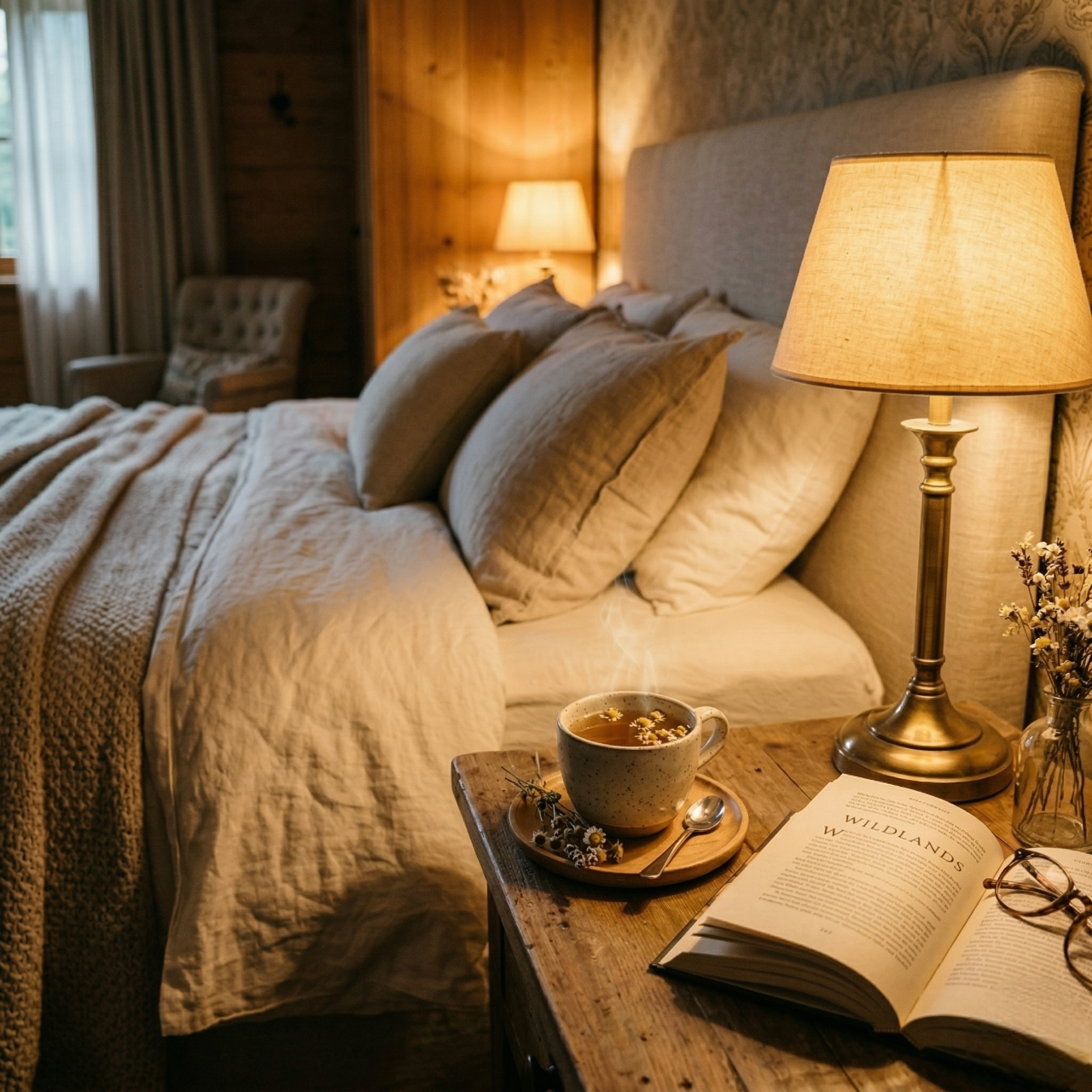
Your bedroom should be more than just a room where you happen to sleep. It should be a carefully considered sanctuary — a space that your brain and body instinctively associate with rest, calm, and recovery. The science of sleep environment design is well-established: the right surroundings can reduce sleep onset time, deepen sleep stages, and increase overall sleep satisfaction.
The Five Pillars of a Sleep Sanctuary
Darkness
Block all light sources for deeper, uninterrupted sleep.
Temperature
The ideal sleep temp is 65–68°F (18–20°C).
Silence
Minimise disruptive noise and consider white noise.
Comfort
Premium mattress, pillows, and breathable bedding.
Calm
Clutter-free, soothing design that signals rest.
1. Master Your Bedroom Lighting
Light is one of the most powerful regulators of your sleep-wake cycle. Even small amounts of light — from a phone screen, a streetlamp through curtains, or a charging indicator — can suppress melatonin and delay sleep onset.
- Install blackout curtains or blinds to fully block outside light
- Cover or remove any electronic devices with bright LED standby lights
- Use warm-toned (amber) bulbs for bedside lighting (2700K or below)
- Consider a sunrise alarm clock that uses gradually increasing light
- Avoid bright overhead lights for at least one hour before bed
Dim your smartphone screen to its lowest setting in the evening, or better yet, charge it outside the bedroom entirely. The bedroom should be a phone-free zone.
2. Optimise Your Room Temperature
Your core body temperature naturally drops as you fall asleep. Helping this process by keeping your room cool is one of the single most effective changes you can make. Research consistently points to 65–68°F (18–20°C) as optimal for most people. Consider breathable, moisture-wicking bedding made from natural fibres like cotton or bamboo.
3. Eliminate or Mask Noise
While complete silence is ideal, it's often not achievable. The bigger problem is unpredictable noise — a sudden sound is far more disruptive than steady background noise. Consider:
- White noise machines to create a steady auditory backdrop
- Earplugs if your environment is consistently loud
- Heavy curtains or rugs which absorb sound and reduce echo
- Soft, calming nature sounds (rainfall, ocean waves) many people find sleep-inducing
4. Design for Calm — Declutter Your Space
A cluttered environment creates a cluttered mind. Research shows that people who describe their bedrooms as chaotic have worse sleep than those with neat, organised spaces. Choose a soothing colour palette: muted blues, soft greens, warm neutrals, and greys are all conducive to relaxation.
Introduce a small indoor plant such as a snake plant or peace lily. Studies show greenery reduces psychological stress, and some plants genuinely improve air quality — a win for sleep.
5. Invest in Your Sleep Surface
All the environmental improvements in the world can be undermined by an uncomfortable mattress. Aches, pressure points, and poor temperature regulation all fragment sleep repeatedly through the night. A Snoooze premium mattress is engineered to provide optimal spinal alignment, pressure relief, and temperature neutrality — the core physical requirements of truly restorative sleep, every night.
Creating a Pre-Sleep Ritual
The sanctuary effect is amplified when you pair a calm environment with a consistent pre-sleep routine. Signal to your body that sleep is coming by repeating the same sequence each night: dim the lights, change into comfortable sleepwear, do a brief stretching or breathing exercise, and avoid screens. Over time, these cues become powerful behavioural anchors that bring on sleepiness reliably.